A bounce house can make a party feel easy fast – until setup day reveals a sloped yard, no outdoor outlet, or a guest count that does not match the unit you booked. That is why understanding bounce house rental requirements before you reserve is one of the smartest parts of event planning. A little prep helps you avoid delays, keep guests safe, and make sure the fun starts on time.
For families, schools, churches, and organizers, the requirements are usually not complicated. They are just specific. The rental company needs a safe setup area, enough clearance, a power source, and an adult plan for supervision. Some events also need extra attention around permits, weather, or surface type. When those details are handled early, the whole experience feels a lot more stress-free.
What bounce house rental requirements usually include
Most rental requirements fall into five practical categories: space, surface, power, supervision, and weather. These are the basics that determine whether an inflatable can be set up safely and used the way it is supposed to be used.
Space matters more than many people expect. It is not just about whether the inflatable itself fits in the yard or event area. There also needs to be room around it for anchoring, airflow, entry and exit, and safe movement for kids waiting their turn. Trees, fences, low rooflines, utility lines, and tight gates can all create problems even when the actual footprint seems large enough.
Surface matters because the inflatable must be secured correctly. Grass is often the simplest setup option because stakes can usually be used. Concrete, asphalt, and indoor floors may still work, but they often require different anchoring methods. That can affect setup planning and, in some cases, whether a specific unit is a good fit for the event.
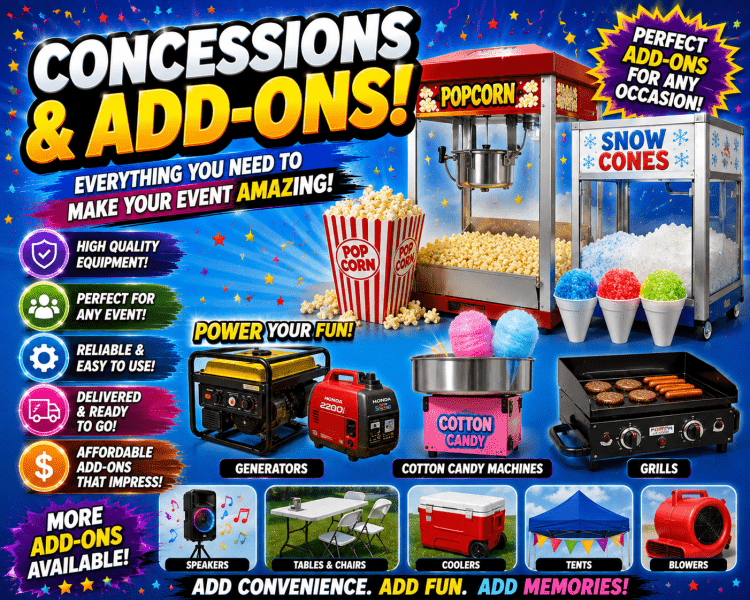
Power is another common issue. Most bounce houses need a dedicated electrical outlet within a workable distance of the setup area. If the outlet is too far away, or if it shares a circuit with too many other items, the blower may not run properly. For parks and larger public spaces, a generator may be needed if power is not readily available.
Then there is supervision. Bounce houses are fun because they are active, but active play needs structure. Safe use depends on adults making sure the right number of kids are inside, roughhousing stays under control, and children of very different sizes are not bouncing together.
Space and setup rules for a smooth rental
One of the most important bounce house rental requirements is having the right setup area before delivery day. The space should be flat, clear, and accessible. If the crew has to carry equipment through a narrow side gate, across landscaping, or up a hill, that can affect what can be installed and how long setup takes.
A good rule of thumb is to plan for more than the inflatable’s listed dimensions. You want room for the blower, anchoring points, and safe entry and exit. Height matters too. Tree branches are a common problem in backyard setups, and they are easy to overlook until delivery day.
If the event is in a park, school, or church lot, ask early about access times and setup restrictions. Some venues have locked gates, limited vehicle access, or rules about where equipment can be placed. Public locations may also have their own requirements for generators, permits, or insurance documentation.
Indoor setups can be a great option, especially during colder months or when weather is unpredictable. But indoor bounce house rentals still need enough ceiling height, floor space, and safe access. A gym may look huge, but lights, beams, or basketball goals can limit the usable area.
Power and surface requirements matter more than people think
Every inflatable depends on constant airflow from the blower. That means power is not optional. In most cases, you will need a working outlet near the setup space. Extension cord planning should be left to the rental company, since using the wrong type or too much distance can create performance and safety issues.
If your event is in a large outdoor area, a generator may be the better solution. That is especially common for school carnivals, field days, church events, and community festivals. It adds one more planning item, but it also gives you more flexibility on placement.
Surface type affects safety just as much as power. Grass is usually ideal because it allows secure staking. Concrete and asphalt can work, but they typically require sandbags or other approved anchor systems. Not every inflatable is a fit for every surface, so it helps to mention this when booking instead of assuming anything goes.
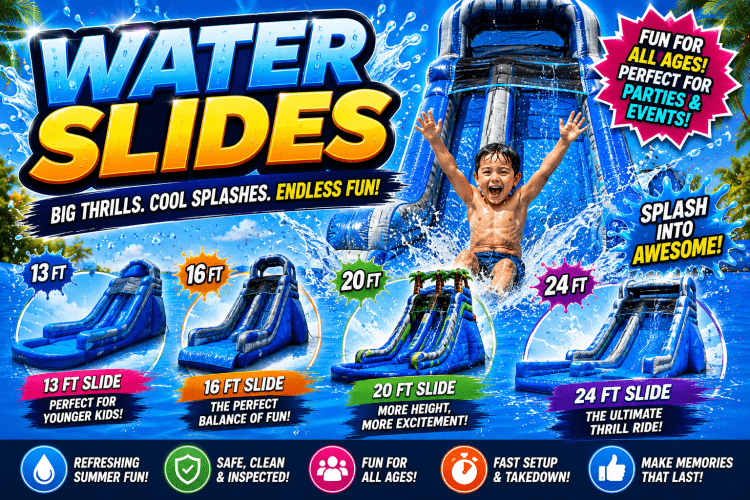
Wet conditions are another factor. If the ground is soft after heavy rain, the setup area may become muddy or unstable. For water slides and wet/dry units, drainage becomes part of the conversation too. You want the splash zone to make sense for the property, not turn into a muddy mess by the second hour of the party.
Safety and supervision are part of the rental
Parents and planners sometimes think safety starts and ends with a clean inflatable and a professional setup. Those are major pieces, but they are not the whole picture. Safe operation during the event is just as important.
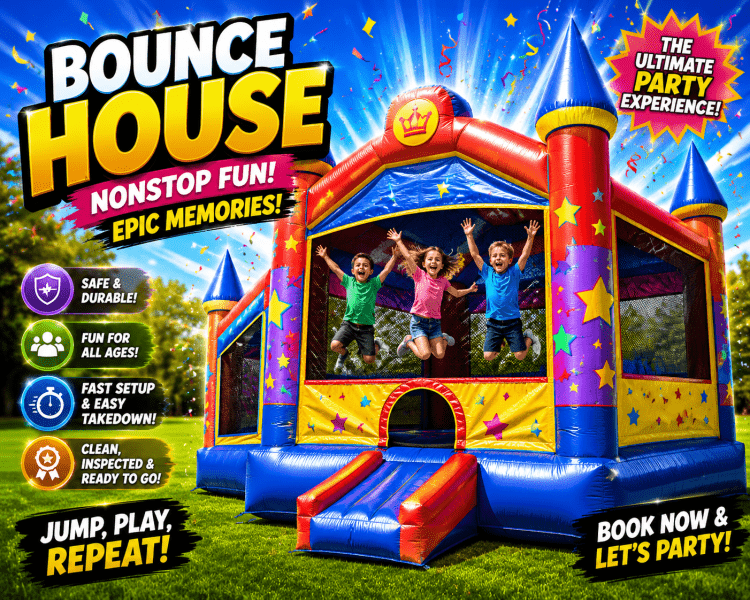
Most bounce house rental requirements include adult supervision at all times. That does not mean casually watching from inside the kitchen. It means having a responsible adult close enough to monitor who is entering, how many kids are playing, and whether they are following the rules. Shoes, food, drinks, sharp objects, and rough play should stay out.
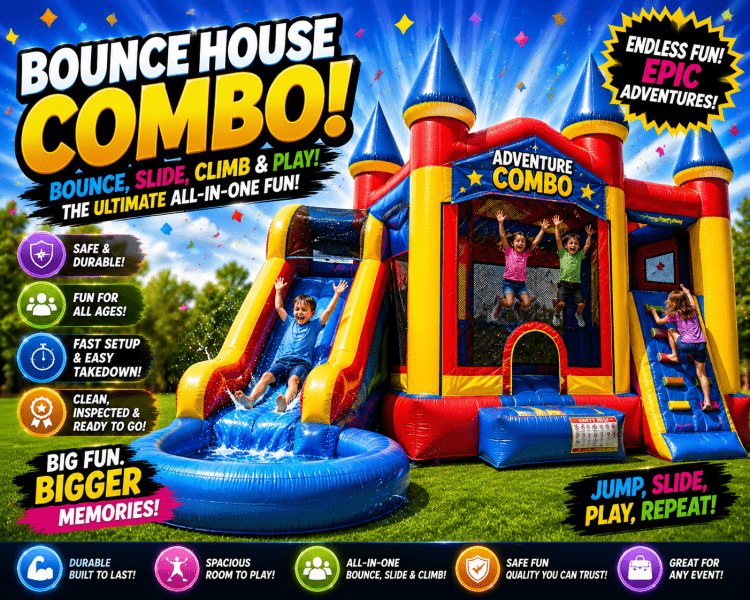
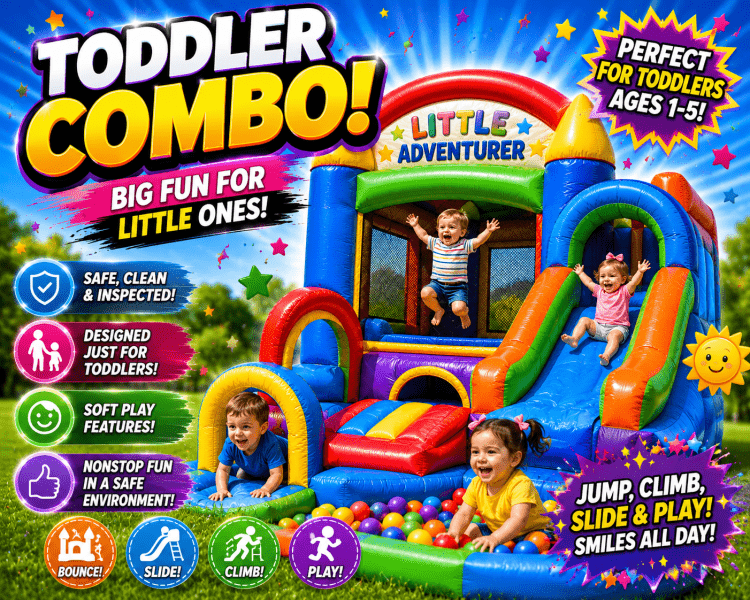
Age and size grouping also matter. A group of toddlers should not be bouncing with big kids who are moving faster and landing harder. Even in a roomy unit, mixing very different ages raises the chance of collisions. If your guest list spans a wide age range, the better move may be choosing a combo unit, adding a second inflatable, or scheduling turns by age group.
Weather is another part of safety, not just convenience. Strong wind, lightning, and heavy rain can make inflatable use unsafe. That is why reputable companies take weather seriously and may pause or cancel setup when conditions are not right. It can be disappointing, but it is the kind of decision that protects guests and property.
For schools, churches, and public events, requirements can be stricter
Backyard birthdays are usually straightforward. Larger organized events often come with another layer of planning. Schools, churches, city events, and corporate gatherings may require proof of insurance, a designated setup zone, or a contact person on site during delivery and pickup.
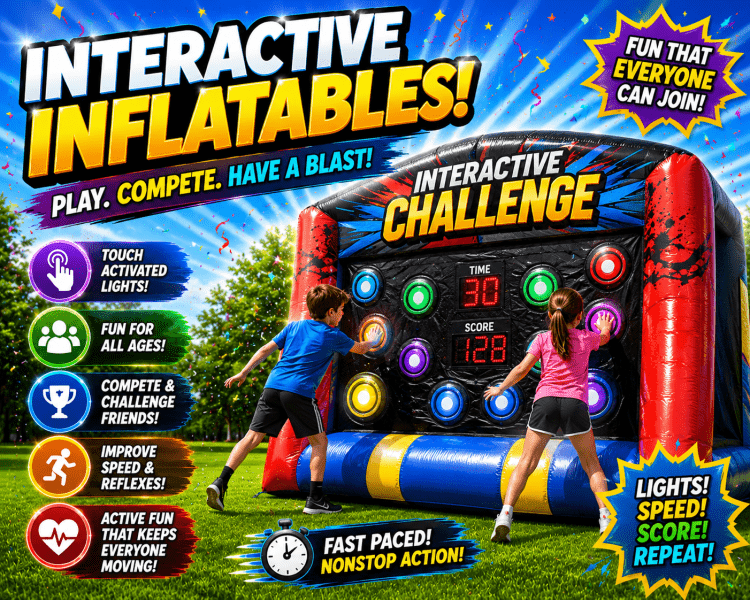
These events also need stronger crowd management. A bounce house at a school carnival will usually have a line, rotating groups, and more traffic than a private party. That changes what kind of inflatable makes sense. A standard bounce house may be perfect for a birthday party, while a larger combo or interactive inflatable may work better when you need to keep lines moving and guests engaged.
Venue rules should always be checked in advance. Some locations do not allow staking into the ground. Others restrict generator use or require setup to happen during a specific time window. If the event is in the Kansas City area, local parks and facilities can vary quite a bit, so early coordination saves a lot of last-minute stress.
How to prepare before you book
The easiest way to handle bounce house rental requirements is to think like the setup crew before you ever place the order. Where will the inflatable go? Is there enough room around it? Is the surface grass, concrete, or indoors? Is there reliable power nearby? Who is supervising once the event starts?
It also helps to match the inflatable to the actual event instead of booking only by appearance. A toddler party has different needs than a fifth grade field day. A backyard with a slight slope may limit larger units. A church event with several age groups may benefit from more than one attraction. When customers share these details early, companies like All Star Inflatables KC can recommend options that fit the space, crowd, and pace of the event.
Cleanliness should be part of the conversation too. Ask how the units are cleaned, inspected, and set up. A professional company should be clear about sanitation, safety checks, and setup standards. That is not a bonus. It is part of the service.
Price matters, but value matters more. The cheapest option is not always the best one if communication is weak, the equipment looks worn, or the setup expectations are vague. Reliable service, clean units, and clear safety practices usually tell you more about the experience you are going to have than a low number on a quote.
The best events are not the ones with the most moving parts. They are the ones where everything works the way it should, kids stay happy, and the host is not troubleshooting extension cords or rearranging the yard an hour before guests arrive. When you understand the requirements ahead of time, the bounce house becomes what it should be – the easy, exciting part of the party.