The question parents usually ask is simple: are bounce houses safe? The honest answer is yes – when the inflatable is clean, properly anchored, matched to the age group, and supervised the right way. Most problems happen when one of those pieces gets skipped, not because bounce houses are automatically unsafe.
That distinction matters if you are planning a birthday party, school event, church gathering, or neighborhood celebration. A bounce house should feel like the easy part of the day – fun for the kids, low-stress for the adults, and handled by a rental company that takes setup and safety seriously.
Are bounce houses safe when used correctly?
They can be very safe when the basics are done right. A quality inflatable is designed for active play, but it is still a piece of equipment, not a free-for-all. Just like a playground, a bounce house works best when the rules match the environment.
Safe use starts with professional setup. The inflatable needs to be placed on an appropriate surface, fully inflated, secured with the correct anchoring system, and checked before anyone gets in. That step alone makes a major difference. A bounce house that looks fine from a distance can still be unsafe if it was rushed into place or not anchored for the conditions.
Supervision is the next big factor. Kids get excited fast, and that is part of the fun. But excitement can turn into collisions when too many children pile in, older kids roughhouse with younger ones, or no one is watching the entrance. Good supervision keeps play moving without taking the fun out of it.
Then there is weather. Wind is the issue adults should take most seriously. Even a well-made inflatable should never be used in unsafe wind or storm conditions. A responsible rental company should have clear weather policies and should never treat this as a minor detail.
What actually makes a bounce house safe or unsafe?
Most safety comes down to four things: equipment quality, setup, supervision, and user behavior. If those four are handled well, the risk drops significantly. If even one is ignored, the chances of injury go up.
Equipment quality matters because not all inflatables are maintained the same way. A commercial-grade unit that is regularly inspected, cleaned, and repaired is very different from one that is aging poorly or patched without care. Parents do not need to become inflatable experts, but they should expect rentals to look clean, solid, and event-ready.
Setup matters because inflatables are only as safe as the team installing them. Anchors, blowers, extension cords, landing areas, and spacing all matter. A professional crew knows how much room the unit needs, how to secure it, and when a site is not a good fit.
Supervision matters because bounce houses are not self-managing. Kids may try flips, wrestling, climbing walls the wrong way, or entering with shoes, food, or sharp objects. Adults do not need to hover over every bounce, but they do need to actively watch and enforce simple rules.
User behavior matters because age and size differences create most of the common problems. A group of toddlers does not play the same way as a group of ten-year-olds. Mixing them in the same unit often leads to falls, hard landings, and accidental collisions.
The most common bounce house injuries
Most bounce house injuries are not dramatic equipment failures. They are everyday play injuries like bumps, awkward landings, or collisions with another child. Sprains, bruises, and minor falls are more common than the scary scenarios people imagine.
That said, injuries can become more serious when the rules are loose. Problems are more likely when too many kids are inside, when large and small children bounce together, or when kids start doing flips and rough play. Entrance and exit areas can also be trouble spots if children push past each other or tumble out too quickly.
The goal is not to eliminate every scrape. No active play does that. The goal is to create an environment where normal kid energy stays within safe limits.
How parents can reduce risk before the party starts
The easiest way to improve safety is to make good decisions before delivery day. Start by choosing a company that treats safety as part of the service, not just a line in the ad. Clean equipment, professional setup, clear instructions, and weather awareness should all be standard.
Ask practical questions. Who sets the inflatable up? How is it anchored? What happens if winds pick up? How many kids should be in the unit at once? Is the inflatable right for your children’s age range? These are not picky questions. They are the questions that help a party go smoothly.
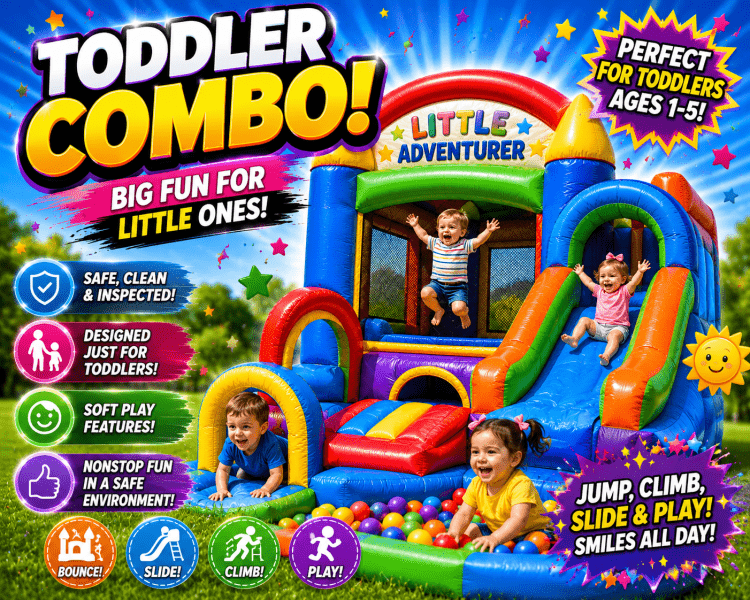
It also helps to pick the right inflatable for your crowd. If your guest list is full of younger children, a toddler unit or smaller bounce house may be a better fit than a large combo designed for bigger kids. If you have a wide age range, separating play times by size is often smarter than trying to let everyone jump at once.
Setup matters more than most people realize
A bounce house is only as safe as the ground beneath it and the crew securing it. Flat surfaces, open space, and proper clearance around the inflatable all matter. Trees, fences, slopes, power lines, and hard obstacles nearby can turn a good setup area into a poor one.
Anchoring is non-negotiable. Commercial inflatables should be secured according to the surface and conditions, whether that means stakes or other approved anchoring methods. This is not something to guess at. It should be handled by trained professionals who know how to evaluate the site.
Electrical setup also matters. The blower needs consistent power, cords need to be managed safely, and the equipment should be protected from water and traffic. These details are easy to overlook when people focus only on the inflatable itself.
Companies that prioritize a clean and safe rental process usually show it in the details. At All Star Inflatables KC, for example, the emphasis on professional setup and a visible cleaning process speaks directly to what families actually care about: kids having a blast without parents wondering whether corners were cut.
Supervision rules that make a real difference
The best supervision is simple, active, and consistent. One adult should be responsible for watching the bounce house, especially during the busiest parts of the event. If everyone assumes someone else is watching, no one really is.
A few rules prevent most issues. Keep similar-sized kids together. Limit the number of riders at one time. No flips, wrestling, or climbing on the walls. Shoes come off, and food, drinks, and sharp objects stay out. If the inflatable has a slide or obstacle features, make sure children use them the intended way.
This is one of those areas where being friendly but firm works best. Kids can still have plenty of fun without turning the bounce house into a contact sport.
Weather is where smart hosts draw the line
If there is one thing adults should never shrug off, it is weather. Wind changes the safety picture fast. Rain can also create slipping issues, and thunderstorms are an obvious stop sign.
A reputable rental company should monitor conditions and be willing to pause, shut down, or cancel use if the weather is not safe. That can feel disappointing in the moment, especially on a party day, but it is the right call every time. Convenience should never outrank safety.
This is especially important in places like the Kansas City area, where weather can shift quickly. A sunny afternoon can turn breezy or stormy with little warning, and that is exactly why professional guidance matters.
So, are bounce houses safe enough for your event?
For most families, schools, and community groups, the answer is yes. Bounce houses are a safe option when rented from a company that takes setup, sanitation, and operating standards seriously, and when adults supervise with basic common sense.
They are not risk-free, because no active kids’ attraction is. But they are also not something parents need to fear when the right safeguards are in place. Think of them the same way you would think about a playground, sports game, or backyard water activity – fun, active, and safest when the adults stay engaged.
If you are planning an event, the smartest move is not avoiding the inflatable. It is choosing one that fits your guests, asking the right questions, and working with a provider that treats safety as part of the fun. When that happens, the bounce house becomes what it should be: the part of the party kids remember for all the right reasons.